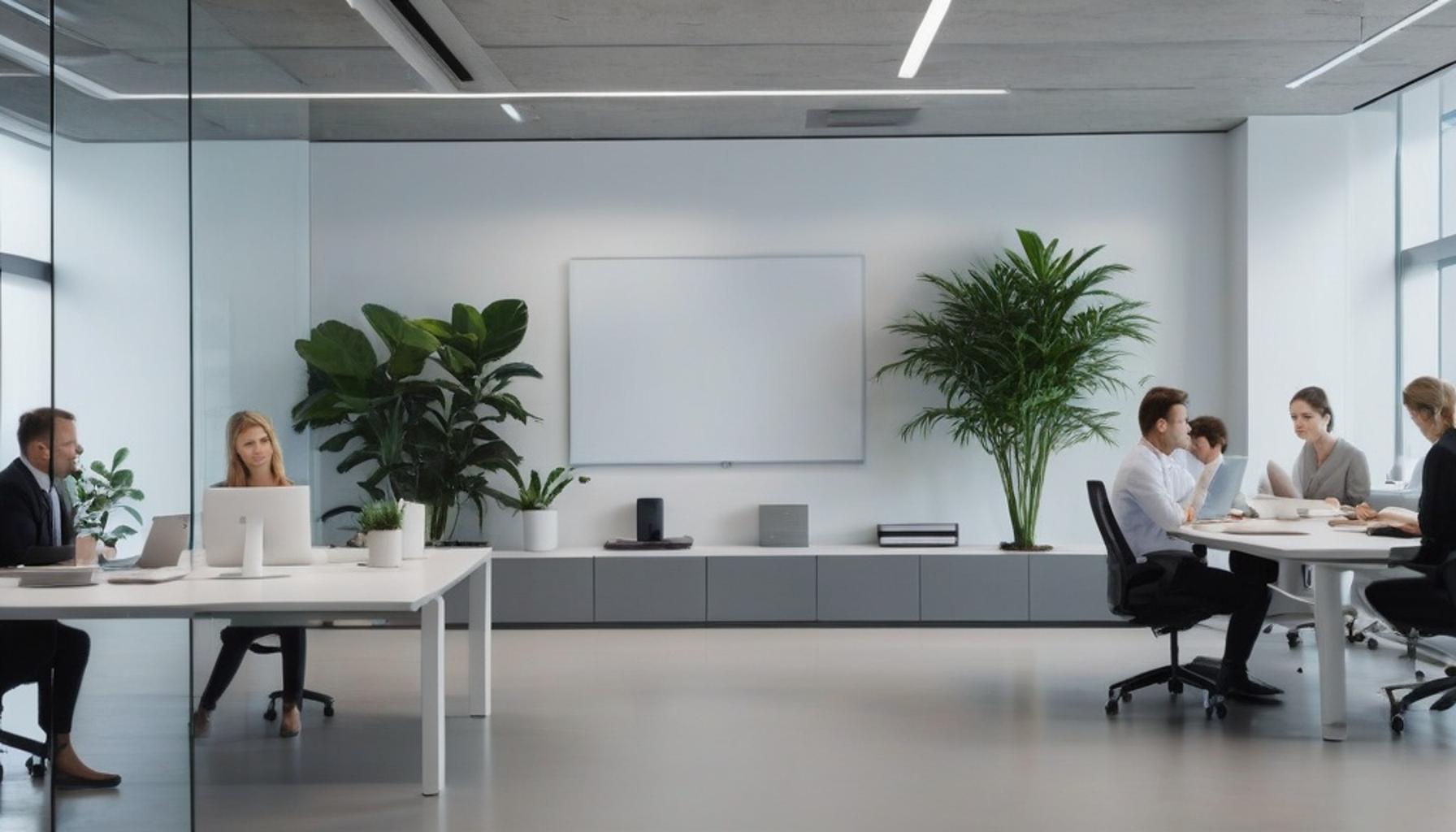
The Importance of Minimalist Workspaces in Time Management

Why Your Desk Might Be Sabotaging Your Schedule
Picture this: a desk buried under coffee cups, tangled cables, and stacks of paper that haven’t moved in weeks. For millions of American professionals working from home or in hybrid offices, this scene is all too familiar. Research from the National Association of Professional Organizers suggests that clutter can cost workers up to an hour a day in lost productivity. This staggering figure reveals just how significant our environments can be in shaping our efficiency and focus.
In an age where remote work has become the norm, many have noticed that their cluttered desks can inadvertently sabotage their schedules. A chaotic workspace not only distracts but can also induce stress, making it harder to concentrate on tasks at hand. This leads to a cycle of procrastination and longer work hours, which ultimately diminishes overall productivity.
Enter the concept of minimalist workspaces — a design philosophy gaining traction from Silicon Valley startups to small-town home offices across the Midwest. It’s not merely about aesthetics; it’s a strategic approach to reclaiming control over your calendar and fostering a more efficient work environment.
What Makes a Workspace “Minimalist”?
A minimalist office design isn’t about owning nothing. It’s about owning only what serves a purpose. A few key characteristics distinguish minimalist workspaces:
- Fewer visual distractions — Clear surfaces, hidden cables, and limited decor contribute to a clean environment, allowing you to maintain focus.
- Purposeful tools — Only incorporate software and supplies that you actually use daily, removing redundant items that clutter your space.
- Defined zones — Create separate areas for focused work, calls, and breaks. This segmentation can help you mentally transition between different types of tasks.
- Digital decluttering — Organize files, minimize open tabs, and streamline inboxes to reduce digital chaos that can be just as distracting as physical clutter.
This article will explore the benefits of minimalist workspaces through a practical lens, focusing on how decluttering for productivity impacts the way we manage our time. For instance, individuals who implement minimalist practices often report improved mental clarity, enhanced creativity, and a greater sense of control over their work-life balance.
We’ll break down actionable time management tips rooted in minimalist principles, along with a step-by-step guide on how to create a minimalist workspace suited to your specific work style. Whether you’re a freelancer in Austin or a corporate employee in New York, the strategies ahead are designed to help you work smarter, not longer, ultimately making your workday more enjoyable and productive.
YOU MAY ALSO LIKE: Minimalist strategies to optimize daily time management
The Science Behind Clutter and Cognitive Overload
Neuroscientists at Princeton University found something striking: visual clutter competes for your brain’s attention, reducing your ability to focus and process information efficiently. When your eyes dart between stacks of papers, sticky notes, and random office supplies, your brain is working overtime just to filter out the noise.
This constant filtering isn’t free. It draws on the same mental resources you need for deep, productive work. Over time, this depletes cognitive energy that could otherwise fuel creativity, problem-solving, and efficient task completion.
The connection between environment and time management becomes clearer when you consider how decision fatigue works. Every item on your desk represents a micro-decision — should I move this, file it, throw it away? Multiply that by dozens of objects, and you’ve got a workspace silently draining your mental bandwidth before you even start your first task.
How Minimalist Workspaces Support Better Time Management
The benefits of minimalist workspaces extend far beyond a tidy appearance. When your environment is streamlined, your brain doesn’t have to work as hard to locate tools, documents, or information, which translates directly into time saved throughout the day.
Consider these practical advantages professionals across the country have reported after adopting minimalist office design:
- Faster task initiation — Without visual distractions, it takes less time to settle into deep work, reducing the dreaded “warm-up” period many remote workers experience each morning.
- Reduced decision fatigue — Fewer physical and digital choices mean more mental energy reserved for actual work decisions.
- Improved time estimation — When tools and files are easy to locate, tasks take less time than expected, helping you build more accurate schedules.
- Lower stress levels — A 2011 study from the Princeton University Neuroscience Institute confirmed that clutter can elevate cortisol levels, the hormone linked to stress, which often leads to procrastination.
These aren’t abstract benefits reserved for productivity gurus or minimalist influencers on social media. They’re measurable outcomes that directly affect how efficiently you complete your to-do list, whether you’re managing client calls from a Chicago apartment or drafting reports in a Seattle co-working space.
Decluttering for productivity isn’t a one-time event — it’s an ongoing practice that reshapes how you interact with your work environment daily. The next section will dive into specific, actionable time management tips inspired by minimalist principles, giving you a practical roadmap to transform your own desk into a productivity-boosting zone.
CHECK OUT: How the reduction of physical objects can increase time efficiency in work environments
Building a Minimalist Workspace: Practical Strategies That Save Time
Knowing the science behind clutter is one thing — actually transforming your desk is another. Fortunately, learning how to create a minimalist workspace doesn’t require an expensive overhaul or a trip to a design showroom in Manhattan. It requires intention, a few smart habits, and a willingness to let go of the “just in case” mentality.
A 2019 survey by the National Association of Professional Organizers found that Americans spend an average of 55 minutes per day searching for misplaced items in cluttered environments, whether at home or in the office. That adds up to roughly 4.5 hours a week — time that could be redirected toward meaningful work, family, or rest.
Start With the “One-Touch” Rule
Professional organizers often recommend the one-touch rule: every item that enters your workspace should be dealt with immediately — filed, actioned, or discarded — rather than set aside “for later.” This single habit prevents the slow buildup of paper piles that eventually become overwhelming.
Applying this rule consistently is one of the simplest time management tips rooted in minimalist philosophy, and it requires no special tools or apps.
Digitize What You Can
Physical clutter isn’t the only culprit. Desktop icons, overflowing email inboxes, and dozens of open browser tabs create digital noise that mirrors the effects of a messy desk. Companies like Google and Microsoft have both published internal research showing that employees who maintain organized digital folders locate files up to 40% faster than those who don’t.
Consider these steps for reducing digital clutter alongside your physical decluttering efforts:
- Archive completed projects instead of leaving them visible on your desktop.
- Unsubscribe from unnecessary email lists to reduce inbox overwhelm.
- Limit browser tabs to only what’s relevant to your current task.
- Use cloud storage systems with clear naming conventions for quick retrieval.
Invest in Multi-Functional, Simple Furniture
Minimalist office design isn’t just about removing items — it’s also about choosing furniture that serves multiple purposes without adding visual noise. A single drawer unit that hides cables, chargers, and notebooks can do more for your focus than three decorative organizers scattered across your desk.
Interior designers in cities like Austin and Portland, known for their minimalist and eco-conscious design trends, often emphasize neutral tones and hidden storage as key elements of a distraction-free workspace. The goal isn’t sterility — it’s clarity.
These strategies form the foundation of the benefits of minimalist workspaces: less time spent searching, fewer distractions pulling focus away from priorities, and a workspace that actively supports rather than sabotages your daily schedule.
The Bottom Line: Less Clutter, More Control Over Your Time
The evidence, from cognitive science labs to workplace surveys conducted across the country, points to the same conclusion: minimalist workspaces aren’t a passing design trend. They’re a practical response to a very real productivity problem.
Every stack of unfiled paper, every overflowing inbox, and every unnecessary desk trinket competes for a portion of your attention. Multiply that by hundreds of micro-decisions throughout the day, and the cost becomes measurable — in the 4.5 hours per week Americans lose searching for misplaced items, and in the mental fatigue that builds long before quitting time.
What makes decluttering for productivity so effective isn’t the aesthetic payoff, though a clean desk certainly looks better on a video call. It’s the reduction in friction. Fewer decisions about where things go. Fewer seconds spent hunting for a charger or a file. Fewer visual cues pulling focus away from the task at hand.
Learning how to create a minimalist workspace doesn’t demand perfection. It starts with small, repeatable habits: the one-touch rule, a tidy digital folder system, furniture that hides rather than displays. None of these require a major investment, yet the cumulative effect on focus and efficiency can be significant.
As remote work and hybrid schedules continue reshaping how Americans structure their days, the workspace itself deserves more scrutiny than it typically receives. The benefits of minimalist workspaces extend beyond time saved — they touch stress levels, decision fatigue, and even the quality of work produced.
Perhaps the real question isn’t whether minimalist office design is worth the effort. It’s how much time, focus, and mental clarity are being lost every day inside workspaces that were never designed with attention in mind.
Frequently Asked Questions
How do minimalist workspaces improve focus during work hours?
Minimalist workspaces reduce distractions by limiting the clutter and unnecessary items in your environment. This clear space allows your mind to focus on the task at hand, leading to improved concentration and enhanced productivity throughout your work hours.
Can a minimalist workspace actually help with time management?
Yes, a minimalist workspace can significantly assist with time management. By simplifying your environment, you spend less time searching for items and more time on essential tasks, leading to greater efficiency and better use of your time.
What are the key elements of a minimalist workspace?
Key elements of a minimalist workspace include a clean desk with only essential tools, organized storage solutions, and a limited color palette that promotes calmness. Incorporating these elements creates an inspiring atmosphere that fosters productive work habits.
How can I transition my current workspace to a minimalist design?
Start by decluttering your desk and removing items that you don’t use daily. Next, choose a few essential and functional pieces to keep, and invest in storage solutions to maintain organization, allowing for a sustainable minimalist workspace.
Are there any specific benefits of a minimalist workspace for remote workers?
For remote workers, a minimalist workspace can reduce the feeling of overwhelm that often comes with home office setups. It encourages a professional atmosphere that aids in maintaining work-life balance and can help to establish clearer boundaries for focused work and relaxation.
Is a minimalist workspace beneficial for creative tasks?
Yes, a minimalist workspace can be highly beneficial for creative tasks. By eliminating distractions, it allows for mental clarity and fosters creativity, enabling you to focus on generating innovative ideas and solutions without external interruptions.

Linda Carter
Linda Carter is a writer specializing in minimalism and personal organization. With extensive experience helping readers create more functional and balanced routines, she shares practical advice on decluttering, organizing spaces, simplifying daily tasks, and making more intentional choices. Her goal is to offer clear guidance and accessible strategies that help people reduce excess, improve their surroundings, and enjoy a calmer, more organized lifestyle.