The Relationship between Minimalist Spaces and Stress Reduction in Time Management

Why Your Cluttered Desk Might Be Sabotaging Your Schedule
Americans spend an average of 2.5 days per year just searching for misplaced items in cluttered environments. That’s precious time stolen from work, family, and rest—time that could be better spent pursuing hobbies, building relationships, or simply unwinding for rejuvenation.
As the hustle and bustle of modern life continues to intensify, a growing number of professionals are discovering an unexpected productivity hack hiding in plain sight: their physical surroundings. The way a workspace is organized can dramatically influence efficiency levels and overall well-being.
The Hidden Cost of Visual Chaos
Research increasingly points to a powerful connection between minimalist spaces and stress reduction. Cluttered environments tend to overstimulate the brain, which can lead to higher stress levels and decreased concentration. A study conducted by the Princeton University Neuroscience Institute found that physical clutter can make it more challenging for the brain to focus on tasks because it forces the brain to process more competing stimuli.
This interplay between minimalism and productivity is more than anecdotal or stylistic; it’s deeply rooted in psychological principles. A stripped-down workspace offers several advantages:
- Reduced visual noise: Fewer items mean less distraction, allowing individuals to maintain better focus on their work.
- Fewer decision points: With a clean environment, there are fewer choices to make throughout the day, freeing up cognitive resources for more important tasks.
- A calm work environment: An organized space signals the brain to slow down, fostering a quieter mental state ideal for creativity and problem-solving.
- Less time spent organizing: When everything has a designated space, you spend less time managing clutter and more time on productive activities.
Rethinking Time Management from the Ground Up
Traditional time management techniques often emphasize rigid schedules and extensive to-do lists. However, consider this: what if the environment itself is the missing piece? A workspace can either energize or drain your productivity levels.
Across the United States, from the sleek offices of Silicon Valley startups to cozy suburban home studios, the benefits of minimalism in design are reshaping how individuals approach their daily routines. This shift isn’t merely about owning fewer items for aesthetic pleasure but about creating intentional strategies for stress reduction that enhance sustained focus.
Incorporating minimalism into your workspace might involve simple yet effective changes, such as decluttering your desk, adopting a digital file management system, or dedicating specific areas for certain tasks. As you explore these strategies, you may find that enhancing your environment not only boosts productivity but also leads to a more fulfilling and balanced life.
YOU MAY ALSO LIKE: How Minimalism Can Increase Your Efficiency in Time Management: Practical Strategies for Personal Organization
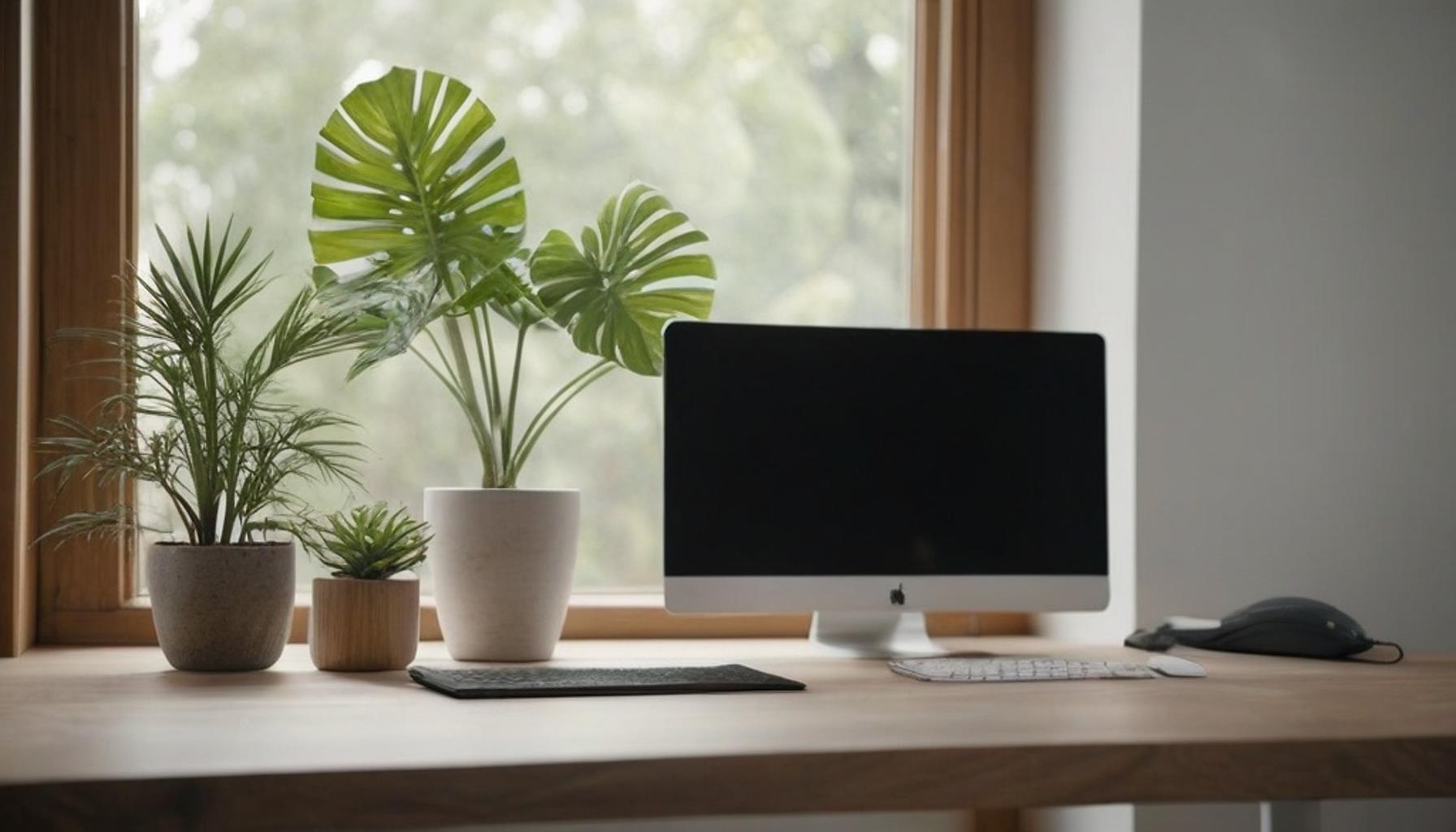
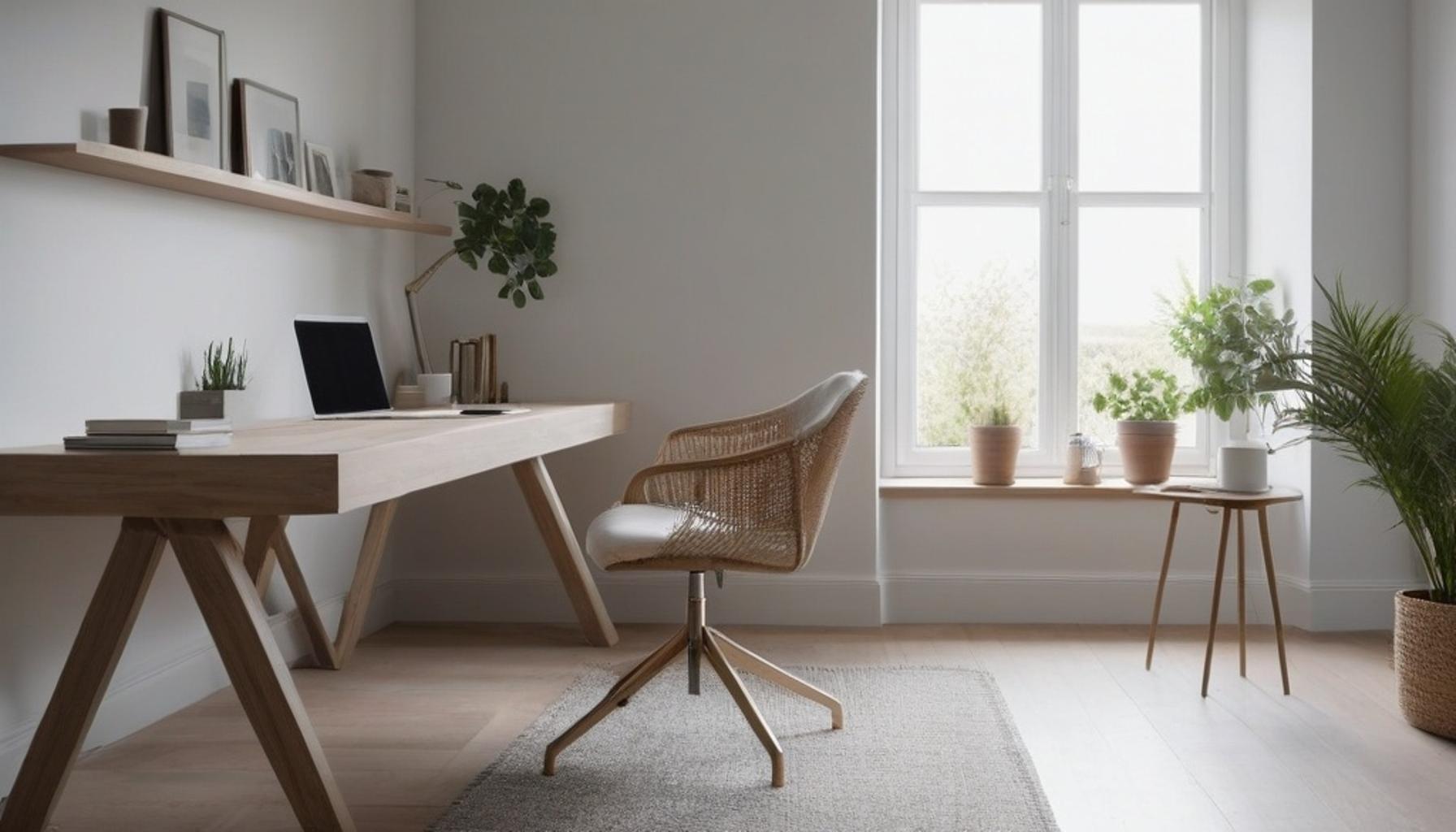
Walking into a workspace designed for optimal performance often opens an unexpected vista—a harmonious expanse of minimalism. From sleek furniture lines to strategically placed plants, the absence of excess serves as a deliberate choice that is deeply intertwined with the human psyche. This approach is not merely aesthetic but has far-reaching implications rooted in cognitive psychology, impacting how individuals manage their time and energy.
What Happens in Your Brain When Clutter Disappears
Research reveals that the relationship between minimalist spaces and stress reduction extends far beyond personal preference. A renowned study by researchers at UCLA investigated the effects of clutter in homes of middle-class American families. The study found that women who identified their living spaces as cluttered faced significantly elevated cortisol levels throughout the day—particularly at night, a time typically reserved for relaxation.This is incredibly significant because cortisol, known as the body’s primary stress hormone, influences both decision-making capacities and perceptions of time. A cluttered environment does not merely manifest as visible disorder; it physically alters brain function, making it more challenging to prioritize tasks effectively. Consider some compelling findings from workplace psychology that illustrate this connection:
- Attention residue: Each item in your peripheral vision competes for your cognitive resources, causing distractions even if you are not actively engaged with them.
- Decision fatigue acceleration: Cluttered environments force an individual to make countless micro-decisions daily—deciding where to place an item or if it should even be there. This continual mental activity drains the energy required for substantial work-related decisions.
- Delayed task-switching: Research has shown that it takes an average of 23 minutes to regain focus after becoming distracted, and clutter drives these micro-distractions throughout your workday.
- Elevated baseline anxiety: Visual disarray triggers a subtle yet persistent stress response, even when individuals do not consciously recognize the connection between their surroundings and their emotional state.
The Productivity Paradox Americans Are Finally Addressing
For generations, American corporate culture revered cluttered desks as symbols of diligence and hard work. However, this perception is undergoing a seismic shift. Innovative companies like Google and Apple have invested extensively in minimalist office designs—focusing on functional aesthetics rather than mere corporate style. The motivations behind these investments extend beyond appearance. Organizations have found that teams in thoughtfully designed, decluttered spaces report markedly higher task completion rates alongside significantly lower stress levels.The interplay between minimalism and productivity becomes even more evident when one considers how the brain processes incoming information. A calm work environment minimizes obstacles between intention and action, lowering the mental friction that often hinders productivity. The physical lack of clutter translates to fewer distractions, thus enabling employees to fully immerse themselves in their tasks.However, embracing minimalism does not equate to creating a sterile or lifeless workspace. Rather, it involves thoughtfully designing an environment that eradicates friction points—silent thieves of time and energy that creep into the daily workflow.In essence, the transition towards minimalist workspaces is more than a passing trend; it is a strategic decision based on the profound understanding of human cognitive behavior. As Americans continue to explore the nexus of environment, mindset, and productivity, it becomes increasingly clear that adopting minimalist principles can lead to greater efficiency and mental well-being—a paradigm shift that holds the promise of redefining how we approach work and productivity in the modern era.
| Key Aspect | Description |
|---|---|
| Clutter Reduction | Minimalist spaces emphasize organization and simplicity, reducing visual clutter. This leads to enhanced focus and could improve time management techniques. |
| Enhancing Calmness | A calm work environment fosters stress reduction strategies that enable better decision-making and productivity, essential for effective time management. |
| Boosting Creativity | Minimalist design opens up space for creativity, unlocking new ideas that allow for efficient task execution and improved focus on priorities. |
| Energy Efficiency | Incorporating minimalist practices in design can lead to lower energy consumption, contributing to a more sustainable workspace that supports long-term stress reduction. |
LEARN MORE: The relationship between digital minimalism and the improvement of personal productivity
Turning Square Footage into Saved Minutes
If the first half of this equation is psychological, the second is remarkably practical. Minimalist spaces and stress reduction do not simply coexist—they actively reinforce one another when translated into daily time management techniques that anyone can implement, regardless of budget or square footage.
The Two-Minute Rule Meets Physical Space
Productivity experts have long championed the “two-minute rule,” which suggests that any task completable in under two minutes should be done immediately rather than postponed. Minimalist environments amplify this principle exponentially.
Consider a simple comparison: locating a specific document in a cluttered file cabinet versus a streamlined digital or physical system with only essential items. Studies on workplace efficiency suggest that employees waste an average of 4.3 hours per week searching for misplaced items or information in disorganized settings. That is over 200 hours annually—nearly five full workweeks—lost to what amounts to preventable friction.
Practical Strategies Rooted in Minimalism
Adopting minimalism as a stress reduction strategy does not require a complete lifestyle overhaul. Several accessible methods have gained traction among busy professionals across the United States:
- The one-surface rule: Keeping only one active project visible on a desk at a time, storing everything else out of sight until needed.
- Digital minimalism parallel: Applying the same declutter mindset to inboxes and desktops, where visual chaos mirrors physical clutter’s cognitive toll.
- The 10-item rule for supplies: Limiting desk accessories to ten or fewer items, forcing intentional choices about what genuinely supports workflow.
- Scheduled reset periods: Dedicating five minutes at the end of each workday to restore order, preventing gradual clutter accumulation that compounds stress over time.
What the Numbers Say About Minimalism and Productivity
A 2019 survey conducted by a national office furniture retailer found that 78% of American workers reported feeling more focused in decluttered environments, while 65% noted they completed tasks faster when their workspace contained fewer visual distractions.
These figures align with broader research on calm work environments, where reduced sensory input correlates directly with improved executive function—the brain’s command center for planning, prioritizing, and executing time-sensitive tasks.
Remote workers have particularly embraced these findings. With home offices often doubling as living spaces, the benefits of minimalist design become even more pronounced, as boundaries between work and rest blur without deliberate environmental structuring.
Ultimately, the data suggests something worth investigating further: the physical spaces we inhabit may be quietly dictating the pace and quality of our productivity far more than most realize.
LEARN MORE: How the reduction of physical objects can increase time efficiency in work environments
Rethinking the Spaces Where We Spend Our Time
The connection between minimalist spaces and stress reduction is not a passing design trend—it is a measurable shift in how Americans approach productivity. From the psychological relief of reduced visual noise to the concrete minutes saved by organized systems, the evidence points toward a single conclusion: environment shapes efficiency far more than most calendars or apps ever could.
Bringing the Pieces Together
Throughout this discussion, a pattern emerges. Clutter taxes the brain’s limited attention resources, while intentional simplicity frees mental bandwidth for decision-making. Time management techniques, no matter how sophisticated, struggle to succeed in environments working against them.
The statistics reinforce this reality. Nearly 4.3 hours weekly lost to disorganization, alongside 78% of workers reporting sharper focus in decluttered spaces, illustrate that minimalism and productivity are deeply intertwined rather than loosely associated.
A New Lens for Everyday Choices
Perhaps the more compelling takeaway is not about aesthetics at all. It is about control. A calm work environment offers something increasingly rare in modern life: a space where decisions feel manageable and time feels recoverable.
For readers considering their own surroundings, the invitation is simple. Start small—clear one shelf, simplify one inbox, or apply one stress reduction strategy consistently for a week. The results, according to the data explored here, tend to compound quickly.
As remote work and flexible schedules continue reshaping American routines, the benefits of minimalist design may soon shift from personal preference to professional necessity. The question worth carrying forward is not whether minimalist spaces influence stress and time management, but how much untapped potential remains in the rooms we already occupy.
Frequently Asked Questions
How do minimalist spaces contribute to reducing stress when managing daily tasks?
Minimalist spaces eliminate distractions and visual clutter, making it easier to focus on tasks at hand. This streamlined environment helps individuals prioritize their time management, reduce overwhelm, and ultimately lowers stress levels.
Can adopting a minimalist workspace improve my productivity and reduce stress?
Yes, adopting a minimalist workspace can significantly enhance productivity by fostering a calm atmosphere that encourages concentration. With fewer items vying for your attention, you can more effectively manage your time and reduce feelings of anxiety regarding unfinished tasks.
What are some practical steps to create a minimalist space aimed at stress reduction?
To create a minimalist space, start by decluttering your environment, keeping only items that are necessary or bring you joy. Organize your workspace by utilizing storage solutions that are functional yet unobtrusive, and incorporate natural light and plants to enhance tranquility and promote stress reduction.
Is there scientific research supporting the link between minimalist spaces and reduced stress?
Yes, various studies have shown that minimalist environments can decrease stress levels by promoting a sense of order and calm. This aligns with psychological principles that suggest clutter can contribute to anxiety and inhibit our ability to focus, supporting the benefits of minimalist spaces for effective time management.
How can I maintain a minimalist space over time to ensure continual stress reduction?
To maintain a minimalist space, regularly assess your belongings and make a habit of removing items that are no longer useful or necessary. Implementing daily organizational routines, such as tidying up at the end of each day, can also help keep your space efficient, reducing ongoing stress related to time management.

Linda Carter
Linda Carter is a writer specializing in minimalism and personal organization. With extensive experience helping readers create more functional and balanced routines, she shares practical advice on decluttering, organizing spaces, simplifying daily tasks, and making more intentional choices. Her goal is to offer clear guidance and accessible strategies that help people reduce excess, improve their surroundings, and enjoy a calmer, more organized lifestyle.