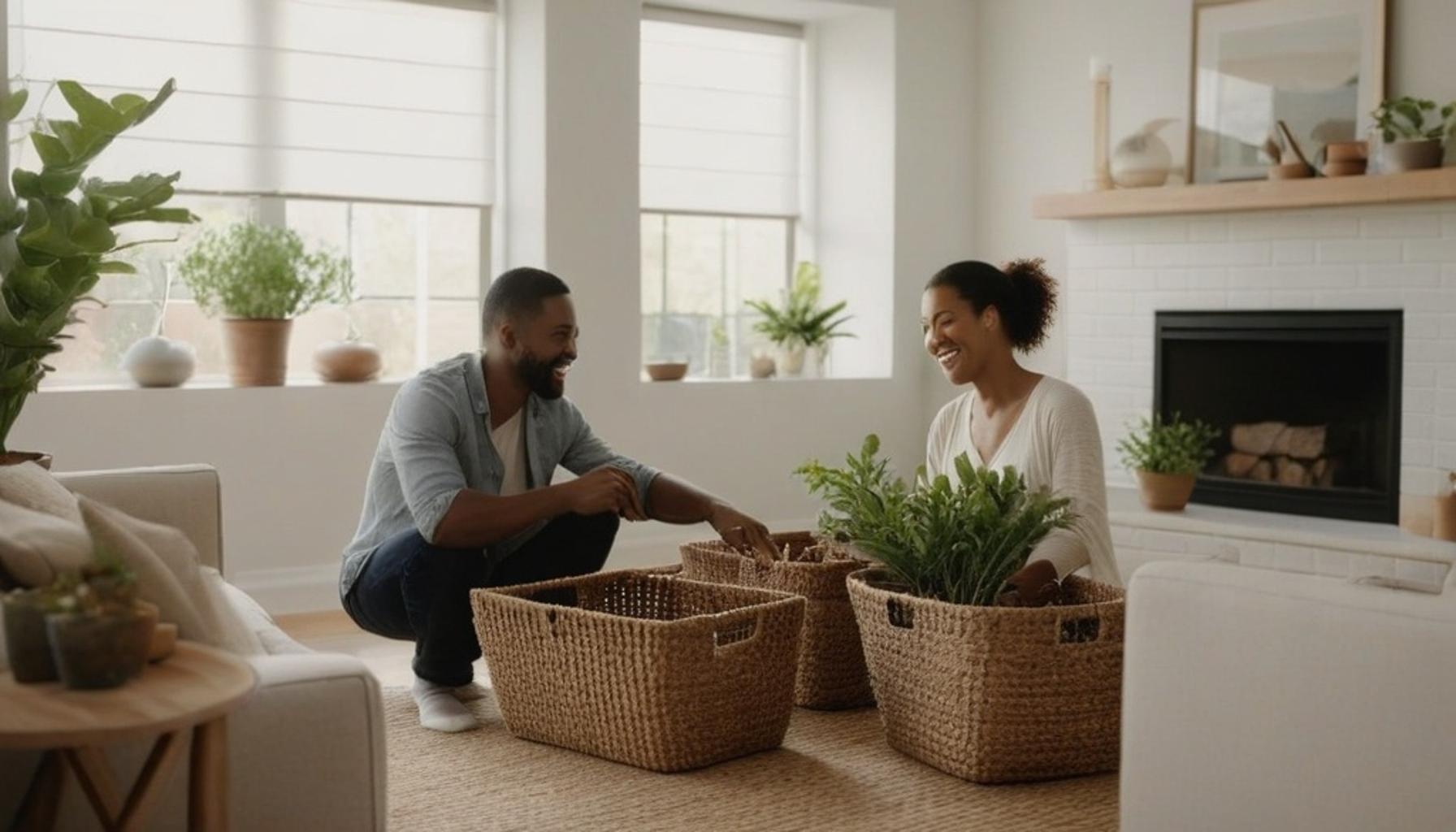
The Art of Letting Go: How Simplified Living Can Transform Your Life

Why Americans Are Rethinking What They Own
Across the United States, a quiet revolution is unfolding in garages, closets, and storage units. From Seattle apartments to Texas suburbs, people are asking the same question: do I really need all of this? This shift toward simplified living is reshaping how families spend, save, and define happiness amidst a culture that often prioritizes consumerism.
This movement towards minimalism is not merely a fleeting trend but a response to the overwhelming clutter that typifies modern life. The numbers tell a compelling story: the average American household contains over 300,000 items, yet studies reveal that excessive clutter can heighten stress levels and contribute significantly to feelings of anxiety. Clutter not only weighs down physical spaces but also our mental well-being, leading many to seek refuge in the principles of minimalism. It’s no wonder that minimalist lifestyle tips have surged in popularity across social media platforms like Instagram and TikTok, where users share their decluttering journeys and organizational hacks.
What This Article Will Explore
Letting go isn’t just about tidying up; it’s a deliberate lifestyle transformation with measurable benefits. This guide examines how to declutter life in practical, sustainable ways, facilitating a deeper understanding of our possessions.
- The psychological benefits of letting go of excess possessions and obligations, such as greater mental clarity and a sense of empowerment.
- Real strategies people use to transform your life by simplifying daily routines, including practical tips for effective organizing and prioritizing what is essential.
- The connection between mindfulness and minimalism in reducing anxiety through focused living and intentional choices.
- Financial freedom gained through intentional consumption habits, leading to reduced spending and increased savings.
Consider this: a 2023 survey found that 78% of Americans who downsized their belongings reported feeling more in control of their lives. This statistic underscores the emotional and psychological impact of decluttering. Such feelings of empowerment and control are not a coincidence; they represent a broader desire for simplicity in a complex world.
More Than a Trend
Simplified living isn’t about owning nothing; it’s about owning intentionally. This philosophy can manifest in various forms, from creating capsule wardrobes that emphasize quality over quantity to digital decluttering where one eliminates unnecessary online distractions. It also includes reassessing weekend commitments to make room for meaningful experiences with loved ones, rather than an overcrowded schedule. The ultimate goal remains the same: to create more space for what truly matters.
What follows is a deep dive into the science, strategies, and real-life stories behind this movement. The question isn’t whether letting go works—it’s about how you’ll apply these principles to your own life. Engaging with this journey can foster not just a simpler lifestyle, but a more fulfilling one too, where material possessions take a back seat to personal happiness and meaningful connections.
YOU MAY ALSO LIKE: The Art of Living with Less: How Minimalism Can Transform Your Daily Life
The Hidden Cost of Holding On
Walk into any American self-storage facility, and you’ll find evidence of a national paradox. The self-storage industry now generates over $39 billion annually, with more than 50,000 facilities scattered across the country. Americans are literally paying to store things they don’t have room for—and often don’t use. This raises an uncomfortable question: why do we keep accumulating what we don’t need?
The answer lies partly in psychology. Researchers at UCLA found that clutter triggers the same stress response as an unfinished to-do list, keeping the brain in a low-level state of alert. This constant background noise affects focus, sleep, and even relationships. Possessions often carry emotional ties and memories, making it difficult to let go. Understanding how to declutter life effectively starts with recognizing that these items carry psychological weight far beyond their physical footprint. For example, a broken vase from a grandparents’ home can remind someone of cherished moments, despite its uselessness in the present.
The Numbers Behind the Movement
Simplified living has moved from niche philosophy to mainstream conversation, and the data reflects this shift. Consider what recent research has uncovered:
- Households that actively practice minimalist organizing report a 20% reduction in reported stress levels within three months of decluttering. This decline in stress can lead to improved mental health and better decision-making.
- The average American spends 1.5 days per year simply searching for misplaced items in cluttered homes, which is time that could be better spent on meaningful activities.
- Searches for “minimalist lifestyle tips” have increased by over 60% in the past five years, according to Google Trends data, indicating a growing interest in simplifying one’s life.
- Nearly 1 in 4 American households now identify with some form of intentional simplified living, whether through minimalism, decluttering, or conscious consumption. This trend reflects a societal shift in values.
These figures suggest something deeper than a passing fad. They point to a collective recalibration—one where Americans are questioning long-held assumptions about success, status, and what a “full life” actually means. The quest for simplicity can lead to a richer life experience, where the focus is placed on relationships and experiences rather than material possessions.
From Suburbs to City Apartments
The appeal of simplified living cuts across geography and income levels. In sprawling suburban homes in Ohio, families are converting oversized garages into functional spaces by clearing out decades of unused equipment. Stories of attics filled with forgotten exercise machines and boxes of outdated clothes are not uncommon. Meanwhile, in compact apartments in Boston and San Francisco, young professionals embrace minimalism out of necessity, discovering unexpected freedom from the burdens of excess. For them, the process of prioritizing essentials often leads to a creative reimagining of their limited space.
What connects these seemingly different experiences is a shared realization: the benefits of letting go extend far beyond tidy closets. People report improved focus at work, more meaningful weekends, and a renewed sense of control over their time and finances. The environmental aspect also cannot be ignored; decluttering often leads to donating or recycling items, contributing to a more sustainable way of life. This transformation rarely happens overnight, but the early stages often bring the most noticeable relief. Even small steps toward simplicity, such as implementing a ‘one-in, one-out’ rule for new purchases, can lead to a significant reduction in stress, proving that even modest changes can create outsized impacts.
Ultimately, embracing a simplified lifestyle invites a deeper, more thoughtful engagement with daily living. Finding value not in what we possess, but in the intangible moments that make life rich and meaningful might be the most profound benefit of all.

DISCOVER: Click here for clever storage tips!
The Psychology of Letting Go: Why Simplifying Rewires the Brain
Beyond the visible clutter in closets and garages lies a less obvious phenomenon: the mental clutter that accumulates alongside physical possessions. Neuroscientists studying decision fatigue have found that every object we own represents a tiny decision waiting to be made—whether to keep, use, clean, or replace it. Multiply that by the thousands of items in a typical American household, and the cognitive load becomes staggering.
This is where mindfulness and minimalism intersect in fascinating ways. When people intentionally reduce what they own, they aren’t just tidying a room—they’re reducing the number of micro-decisions their brain processes daily. Psychologists refer to this as “cognitive offloading,” and it may explain why so many people describe decluttering as feeling like a mental exhale.
What Happens Inside the Brain During Decluttering
A study published in the Journal of Neuroscience found that visual clutter competes for attention in the same way multiple conversations compete for focus in a noisy room. The brain, researchers noted, has a limited capacity to process visual stimuli, and cluttered environments force it to work harder just to filter out irrelevant information.
Consider these findings from behavioral studies on simplified living:
- Participants in decluttered environments completed focus-based tasks 32% faster than those in visually cluttered spaces, according to research from Princeton University’s Neuroscience Institute.
- Simplified home environments have been linked to lower cortisol levels, the hormone most associated with chronic stress.
- Individuals who practice regular decluttering routines report higher levels of self-efficacy, meaning they feel more capable of handling challenges in other areas of life.
These findings suggest that the benefits of letting go aren’t merely aesthetic. They’re neurological, influencing how effectively a person can concentrate, make decisions, and manage everyday stress.
Practical Steps That Actually Work
For those wondering how to begin, experts in organizational psychology suggest starting small rather than attempting a full-scale purge. Trying to overhaul an entire home in a weekend often leads to burnout and abandoned efforts.
Some of the most effective minimalist lifestyle tips include:
- Setting a timer for 15 minutes and focusing on a single drawer or shelf, rather than an entire room.
- Asking whether an item has been used in the past 12 months, a common benchmark used by professional organizers nationwide.
- Photographing sentimental items before donating them, preserving the memory without the physical burden.
- Creating a designated “maybe” box for uncertain items, revisiting it after 30 days to decide with more clarity.
These incremental strategies reflect a broader truth about how to transform your life by simplifying: lasting change tends to come from consistent, manageable habits rather than dramatic, one-time overhauls. Across the country, from Midwest ranch homes to coastal condos, this steady approach is proving to be the most sustainable path toward a lighter, more intentional way of living.
Embracing Simplified Living as an Ongoing Journey
The evidence is clear: simplified living is far more than a passing design trend or a viral social media aesthetic. It is a documented shift in how the brain processes stress, attention, and decision-making. From Princeton’s research on cognitive load to real-world accounts of Americans reclaiming their homes and headspace, the science and the stories point in the same direction.
What makes this movement compelling is that it doesn’t demand perfection. The benefits of letting go emerge not from owning nothing, but from owning intentionally. A single decluttered drawer, a donated box of old clothes, or a “maybe” pile revisited after 30 days—these small acts accumulate into meaningful change over time.
Learning how to declutter life is ultimately less about the objects themselves and more about reclaiming mental bandwidth. Each item removed represents one less decision, one less distraction, and one more ounce of clarity restored to daily living.
As more households across the United States, from bustling city apartments to quiet suburban neighborhoods, adopt these principles, a broader question emerges: what else in life—commitments, relationships, digital habits—could benefit from the same thoughtful editing?
That question is worth sitting with, because the true promise of mindfulness and minimalism extends beyond square footage. It invites a reevaluation of how time, attention, and energy are spent.
Anyone ready to transform your life by simplifying doesn’t need a dramatic weekend overhaul. A single drawer, fifteen minutes, and a willingness to ask “does this still serve me?” are enough to begin. The rest, as research and countless personal experiences suggest, tends to follow naturally.
Frequently Asked Questions
What are the first steps to start practicing simplified living?
Begin by decluttering your space and identifying items that no longer serve a purpose in your life. Focus on creating a minimalistic environment that promotes peace and reduces stress. Setting clear intentions about what you want to keep can also help streamline the process.
How can simplified living improve my mental health?
Simplified living can lead to reduced anxiety and stress levels by minimizing distractions and creating a calming environment. By letting go of unnecessary belongings and commitments, you allow yourself the mental space to focus on what truly matters, leading to improved emotional well-being.
What are the long-term benefits of adopting a simplified lifestyle?
Adopting a simplified lifestyle can lead to greater financial freedom, improved relationships, and enhanced overall happiness. Living with less can help you prioritize experiences over material possessions, fostering deeper connections and a more fulfilling life.
Is simplified living suitable for families with children?
Yes, simplified living can be highly beneficial for families with children. By involving your kids in the decluttering process, you teach them the value of mindfulness and responsibility, while creating a more organized home that is easier to manage and maintain.
How does simplified living affect my spending habits?
Simplified living encourages conscious spending by shifting your focus from acquiring new items to valuing experiences and essential needs. As you learn to prioritize what truly matters, you may find yourself making more thoughtful purchasing decisions, ultimately leading to savings and reduced financial stress.
Can adopting simplified living help with time management?
Absolutely! Simplified living often leads to better time management by reducing the number of commitments and distractions in your life. With fewer responsibilities and clutter, you can allocate more time to activities and relationships that bring you joy and fulfillment.

Linda Carter
Linda Carter is a writer specializing in minimalism and personal organization. With extensive experience helping readers create more functional and balanced routines, she shares practical advice on decluttering, organizing spaces, simplifying daily tasks, and making more intentional choices. Her goal is to offer clear guidance and accessible strategies that help people reduce excess, improve their surroundings, and enjoy a calmer, more organized lifestyle.