Decluttering Methods for Families: Making Organization a Collective Effort
Why Clutter Becomes a Family Affair
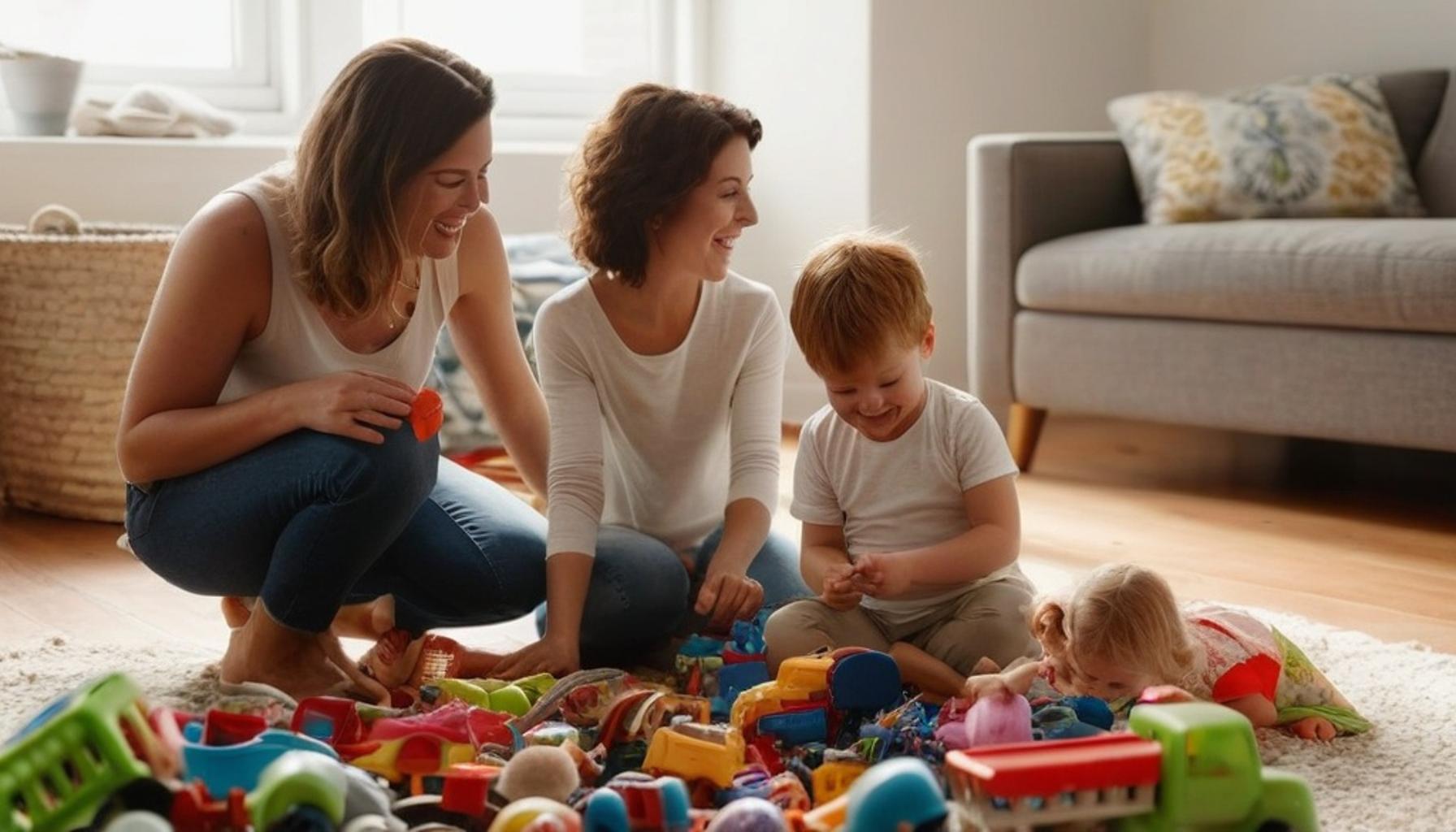
The average American household contains over 300,000 items, according to organizing experts. This staggering figure sheds light on how quickly clutter can accumulate, particularly in shared living spaces. Within a single family home, toys can pile up in living rooms, paperwork can overflow onto kitchen counters, and closets can become chaotic battlegrounds filled with competing belongings. It’s easy to see how, when multiple people contribute to the mess, the responsibility of addressing the clutter should also fall on multiple parties.
Clutter accumulation doesn’t just create aesthetic issues; it can also significantly impact family dynamics, mental health, and overall well-being. Research has shown a link between cluttered environments and increased stress levels, particularly contributing to heightened anxiety in mothers, who may feel overwhelmed by both their personal responsibilities and the collective mess. Thus, addressing clutter through a family lens is increasingly relevant in today’s busy households.
Rethinking Organization as a Team Sport
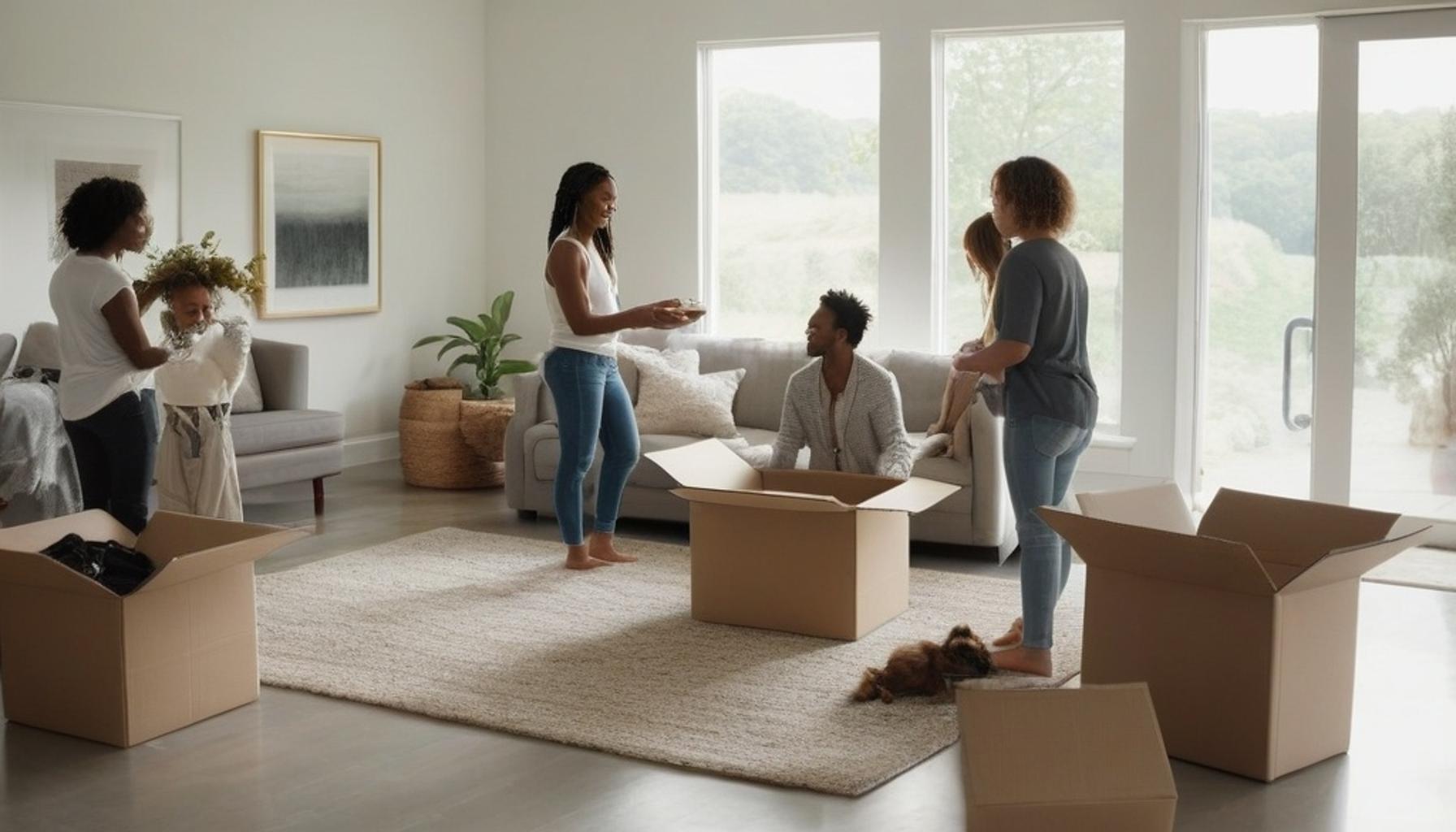
Traditional decluttering advice often encourages individuals to tackle their mess in solitude, focusing on personal belongings and space. However, Decluttering Methods for Families necessitate a departure from this individualistic approach, transforming tidying into a collaborative group project instead. This collaborative strategy can help minimize conflict and foster a sense of teamwork among family members.
The significance of this shift in perspective cannot be understated. A coordinated family effort encourages bonding and communication while simultaneously facilitating a deeper understanding of shared responsibilities. Each family member can contribute meaningfully, which not only results in a tidier space but also promotes enhanced family cohesion.
What Makes Family Decluttering Different
Getting everyone on board requires strategies designed specifically for households. These tactics are not merely about cleaning but involve fostering a collective sense of ownership over the shared environment. Consider these key differences:
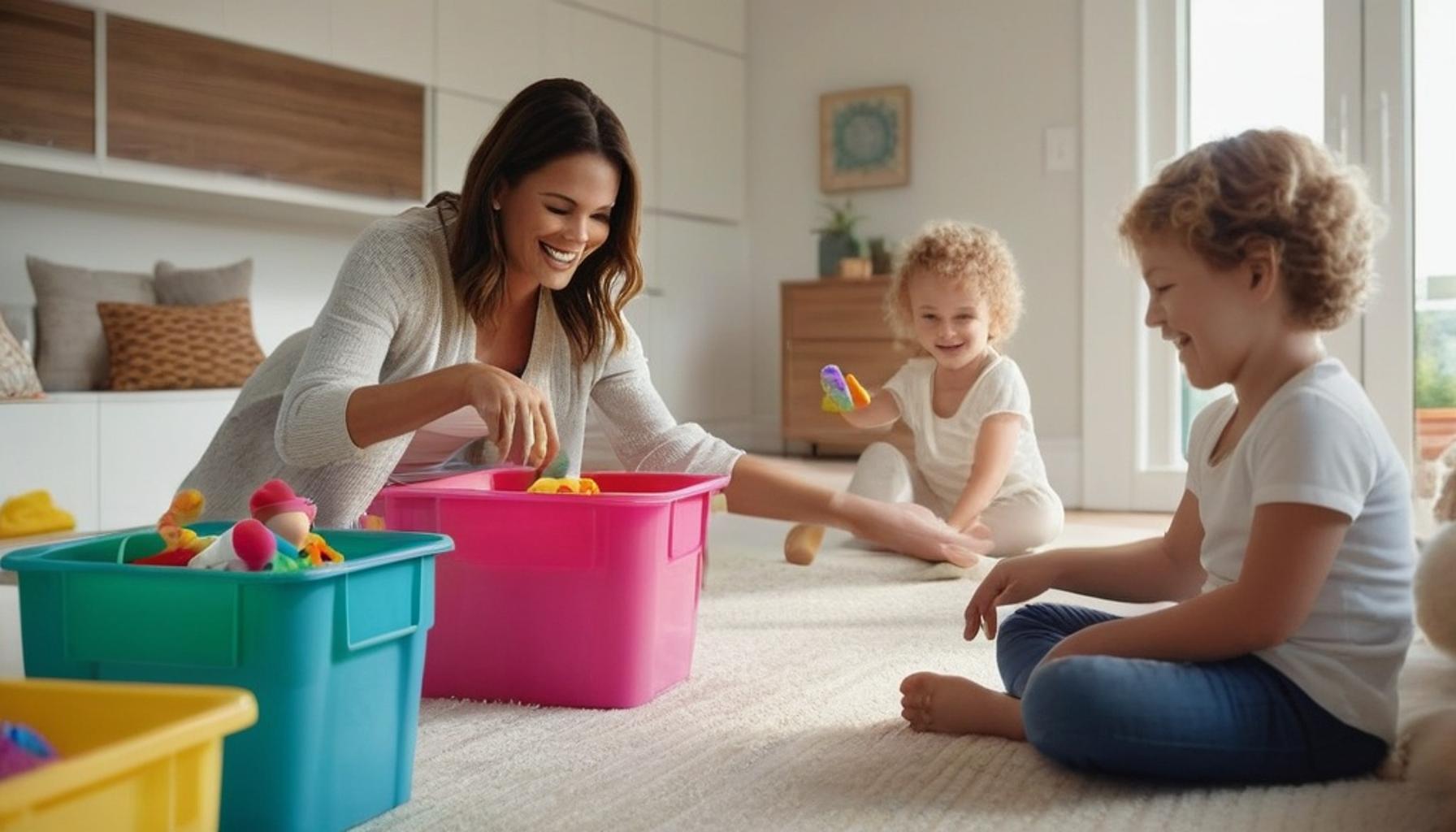
- Age-appropriate tasks: Encourage toddlers to sort toys while older teens handle their own closets, allowing each family member to contribute based on their ability.
- Shared accountability systems: Utilize family decluttering calendars or point charts that track and reward contributions, providing motivation for everyone involved.
- Zone-based approaches: Assign specific areas to designated family members, which fosters responsibility and clarity in task execution.
- Regular family meetings: Schedule discussions to review progress, brainstorm new strategies, and recognize contributions, creating a platform for open communication.
These team-focused decluttering strategies can transform what may be a contentious source of conflict into an opportunity for collaboration and cooperation. Families who successfully implement collective organization methods often report fewer arguments about messiness and a greater commitment from even the most reluctant participants.
The following sections will delve into proven ways to declutter as a family. From implementing Marie Kondo-inspired techniques adjusted for children to exploring digital tools designed to track engagement, each method will be rooted in the experiences of real households navigating similar challenges that yours may face. Embracing such approaches not only leads to a clearer space but also nurtures stronger family relationships.
YOU MAY ALSO LIKE: The Importance of Digital Decluttering: How to Organize Your Devices and Data
The Marie Kondo Method, Reimagined for Households
Marie Kondo’s philosophy of keeping only items that “spark joy” has swept through American living rooms for years, but the original method was designed with individuals in mind. When applied to a household of four, six, or even more people, the approach requires meaningful adjustments. Decluttering Methods for Families often borrow Kondo’s category-based system while layering in structure that accounts for differing ages, attachments, and opinions.
Instead of directly asking a seven-year-old whether a stuffed animal “sparks joy,” seasoned organizers suggest reframing the question into something more concrete: “Have you played with this in the last six months?” This small linguistic shift makes the process accessible to children while still teaching them to evaluate their belongings critically. Such strategies not only engage younger family members but also help them develop decision-making skills that carry on into adulthood.
Family-adapted Kondo sessions typically follow a modified sequence, ensuring that everyone contributes while respecting each person’s attachments and perspectives:
- Clothes first: Each family member sorts their own wardrobe, with younger children assisted by a parent, allowing kids to make genuine choices rather than have decisions made for them. This step not only clears closet space but also fosters independence.
- Books and toys next: Siblings can collaborate, comparing what they’ve outgrown and negotiating what stays in shared spaces. This teamwork instills a sense of responsibility and mutual respect for belongings that belong to others.
- Papers and miscellaneous items: Typically, adults tackle this category, though teens can be looped in especially when it’s related to their school records or personal documents. This ensures that they are aware of the importance of maintaining organization in their academic lives.
- Sentimental items last: This category is saved for the end, as it tends to generate the most emotional discussion. By saving it for last, families can benefit from previous decluttering discussions, creating a more constructive environment for potentially difficult decisions.
Professional organizers who work with households report that families following this sequence complete projects up to 40 percent faster than those who tackle rooms randomly. The category-based structure is effective in preventing the all-too-common pitfall of moving from room to room without ever finishing a single space. Instead, this structured method allows families to experience a profound sense of accomplishment as areas become organized one category at a time.
Turning Sorting Into a Shared Language
One underappreciated benefit of adapting Kondo’s method for group use is that it provides families with a shared vocabulary related to their belongings. For instance, when a child expresses that an item no longer “earns its spot,” parents instantly grasp the rationale without prolonged debates. This language not only streamlines the decluttering process but also lays a foundation for understanding and cooperation.
This shared language becomes one of the more practical family organization tips for long-term clutter prevention. Households that adopt consistent terminology find it easier to revisit decluttering as an ongoing habit rather than viewing it as a daunting one-time overhaul. For example, phrases like “earns its keep” or “active vs. inactive” can reinforce a culture of mindfulness towards possessions.
Across the United States, community organizing groups, from Seattle to Atlanta, have begun hosting workshops specifically designed to teach this family-adapted version of the Kondo method. This surge in interest signals a growing demand for team decluttering strategies that move beyond individual-focused advice. Families are finding ways to bond over shared efforts to maintain organized spaces and, as a result, improve their overall quality of life.
Incorporating Kondo’s principles in a family format not only transforms living spaces but also nurtures relationships and teaches valuable life skills to younger generations. As the process unfolds, parents can encourage discussions about values, priorities, and the importance of space management, ensuring that the journey of decluttering becomes a family adventure.
| Decluttering Method | Description and Benefits |
|---|---|
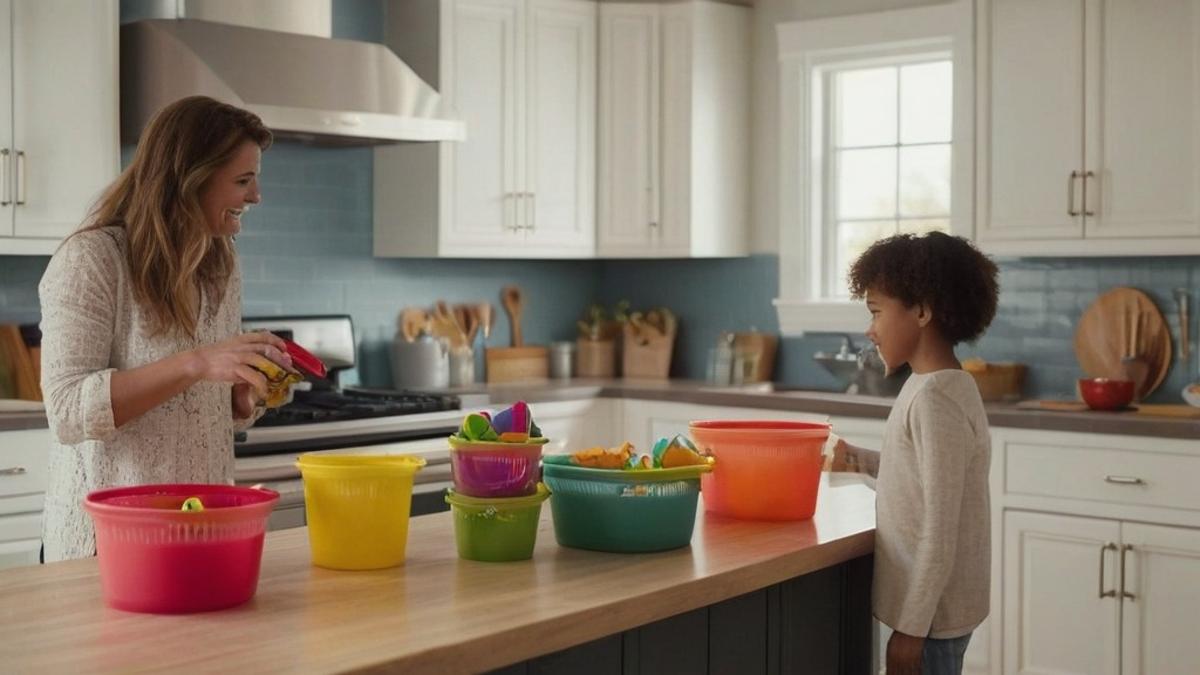
| Team Decluttering Strategies | This method encourages family members to work together, assigning specific areas or items. Benefits include improved communication and a sense of shared accomplishment. |
| Collective Organization Methods | Involve everyone’s input on what stays and what goes. This fosters collaboration and helps children learn decision-making skills. |
| Family Cleaning Days | Designating a regular day for decluttering creates a routine. Assigning roles based on age can enhance responsibility and teamwork. |
| Visual Decluttering Goals | Creating visual reminders of goals helps keep motivation high. This can lead to increased enthusiasm and a fun, engaging environment. |
SEE ALSO: Digital Decluttering: How to Organize Your Devices for a More Minimalist Life
The Command Center Model: Assigning Zones and Roles
While the Kondo-inspired approach handles the emotional sorting of belongings, many households find they need a second framework to manage the logistics of daily clutter. Enter the “command center” model, a system borrowed from workplace organizational psychology and adapted by professional organizers for residential use. This approach treats the home less like a single unit and more like a series of departments, each with an owner and a set of standards.
The concept is straightforward. Every room, or even sections within a room, gets assigned to a specific family member who becomes responsible for maintaining that zone. A teenager might oversee the mudroom and entryway, ensuring shoes and backpacks don’t pile up by the door. A younger sibling might take charge of the game closet. Parents typically claim the kitchen command center, that ever-important stretch of counter where mail, keys, and permission slips tend to accumulate.
This zone-based structure is one of the more effective team decluttering strategies because it distributes accountability instead of concentrating it on one exhausted parent. Organizational consultants who study household dynamics note that families using zone assignments report significantly less resentment around chores compared to households where one adult manages all tidying tasks.
Weekly Reset Rituals That Actually Stick
Beyond assigning zones, many families are adopting scheduled “reset” sessions, short bursts of coordinated tidying that happen at the same time each week. Sunday evenings seem to be the most popular slot, likely because it allows households to start the school and work week with a clean slate.
A typical reset ritual might include:
- Fifteen-minute timer challenges: Each person races to clear their assigned zone before the timer runs out, turning a mundane task into a friendly competition.
- Rotating “hot spot” duty: One trouble area, whether it’s the dining table or the living room floor, gets tackled collectively regardless of whose zone it falls under.
- Quick visual check-ins: Parents walk through the home with kids, pointing out what’s working and what needs attention next week, reinforcing the habit without turning it into a lecture.
Family therapists who focus on household routines have observed that these short, repeated rituals tend to outperform occasional deep-cleaning marathons. The reasoning is simple: consistency builds habit, and habit reduces the friction that leads to clutter buildup in the first place. This is one of the more overlooked family organization tips, since it shifts the goal from achieving a perfect home to maintaining a functional one.
Cities like Denver and Minneapolis have seen a rise in local parenting groups exchanging their own versions of these reset rituals, often sharing printable checklists or chore-tracking apps designed specifically for multi-person households. These grassroots exchanges suggest that collective organization methods are becoming less about rigid rules and more about flexible systems families can customize.
What makes the command center model particularly useful for family clutter reduction is its scalability. A household of three can implement it with minor adjustments, while a family of seven might expand the number of zones and rotate responsibilities monthly. Either way, the underlying principle remains the same: clutter accumulates fastest when no one feels ownership over a space, and dissolves fastest when everyone does.
LEARN MORE: How to Create a Decluttering Plan in 30 Days: Practical Steps for a Minimalist Life
Bringing It All Together: What Sustainable Family Systems Look Like
Across every method explored here, one theme surfaces again and again: Decluttering Methods for Families succeed not because of a single perfect system, but because of shared responsibility. Whether a household leans on emotional sorting frameworks or zone-based command centers, the outcome depends less on the technique and more on whether everyone feels invested in the result.
That’s worth remembering before investing in yet another storage bin or labeling gadget. The families seeing the most lasting change aren’t necessarily the ones with the most elaborate systems. They’re the ones who’ve made tidying a shared language rather than a solo chore assigned to whoever has the most patience left at the end of the day.
Some practical takeaways worth revisiting:
- Start small: A single zone or a fifteen-minute reset can build momentum faster than an ambitious, whole-house overhaul.
- Rotate roles: What works for a six-year-old won’t work for a teenager, so revisiting assignments every few months keeps buy-in high.
- Track progress loosely: Checklists and apps help, but rigid tracking can backfire if it starts to feel like surveillance rather than teamwork.
Ultimately, the most effective ways to declutter as a family tend to blend structure with flexibility. Borrow the parts of the KonMari method that resonate, adopt a command center if logistics feel chaotic, and don’t be afraid to modify either system until it fits your household’s rhythm.
As more families across the country experiment with these collective organization methods, a clearer picture is emerging: clutter is rarely just a storage problem. It’s a communication problem, a habit problem, and sometimes a fairness problem. Addressing it as a team, rather than delegating it to one overworked parent, may be the real innovation behind this shift in how American households approach family clutter reduction.
Frequently Asked Questions
What are some easy decluttering methods for families with young children?
For families with young children, implementing a ‘one in, one out’ rule can be very effective. Encourage kids to donate or discard a toy whenever they receive a new one. Additionally, creating designated play zones and involving children in the organizing process can make decluttering fun and teach them about responsibility.
How can I motivate my family to participate in decluttering efforts?
Motivating family members to participate in decluttering can be achieved by making it a fun and engaging activity. Organize family challenges, set timers for quick tidy-up sessions, and reward everyone’s efforts with a family outing or treat after reaching your goals. It’s important to emphasize the benefits of a decluttered space for the whole family.
Are there specific decluttering strategies ideal for large families?
Large families may benefit from assigning specific areas or categories to each member for decluttering, ensuring everyone has a stake in the process. Implementing a monthly family decluttering day where everyone addresses their belongings can also help manage clutter more effectively. Consistency and communication are key to maintaining organization in larger households.
What decluttering methods can help with sentimental items in families?
Addressing sentimental items can be challenging, but consider methods like the ‘Memory Box’ approach where each family member gets a designated space for treasured items. Encourage conversations about memories associated with items, and when discussing decluttering, focus on preserving those memories through photos or keepsakes rather than keeping every physical item.
How often should families declutter their living spaces?
Families should aim to declutter their living spaces at least once every season to prevent accumulation. However, more frequent mini-decluttering sessions can also be beneficial, especially after holidays or special events. Establishing a routine, such as a monthly check-in, helps maintain organization throughout the year.
What role can kids play in the decluttering process?
Kids can play an active role in the decluttering process by helping to identify items they no longer use or need. Encourage them to sort through their toys, clothes, and school supplies, promoting ownership over their belongings. This not only helps them learn valuable organization skills but also fosters a sense of responsibility in maintaining a tidy home.

Beatriz
Beatriz Johnson is a seasoned minimalist and writer with a passion for simplifying the complexities of personal organization and intentional living. With over a decade of experience in decluttering strategies and mindful consumption, she specializes in topics like space optimization, habit simplification, and sustainable lifestyle choices. Through her work on our website, Beatriz empowers readers to embrace minimalism, reduce mental and physical clutter, and create more meaningful, organized lives in today's fast-paced world.