Effective Decluttering Techniques for Every Room in Your Home
Why Clutter Keeps Piling Up—and How to Finally Stop It
The average American household contains over 300,000 items, according to organizing experts, and many of them are rarely used. With overflowing closets, stuffed junk drawers, and garages that no longer accommodate cars, clutter has become a pervasive issue. It’s not surprising that searches for Effective Decluttering Techniques surge each January, coinciding with New Year resolutions, and again before the summer moving season—a time when many look to refresh their living spaces.
The Real Cost of a Cluttered Home
Clutter is not merely a visual nuisance; it has deeper ramifications for our mental and physical well-being. Research shows a strong connection between disorganized environments and elevated levels of cortisol, the stress hormone. This links heightened stress particularly to the burden of household management, with women reporting even greater challenges in maintaining order.
- Increased stress and anxiety: A chaotic space can overwhelm our senses and leave us feeling powerless, often leading to feelings of anxiety and restlessness.
- Wasted time searching for misplaced items: The average person spends over 55 hours a year looking for lost items, a statistic that highlights the time-consuming nature of clutter.
- Reduced home resale value: Homes flooded with items may appraise lower than their minimalist counterparts, deterring potential buyers who value neat and organized spaces.
- Higher risk of accidents: Clutter can pose physical dangers, such as tripping hazards, particularly for children and the elderly, making it essential to reduce clutter for safety’s sake.
A Room-by-Room Approach That Actually Works
Vague advice like “just get rid of stuff” often fails, as effective home organization techniques require bespoke strategies tailored to each room’s unique needs. For instance, the clutter challenges in a kitchen, laden with utensils and expired condiments, differ immensely from those in a bedroom filled with unworn clothes and unused items.
This guide provides practical, room-specific decluttering tips for every room. Drawing upon tried-and-tested minimalist living strategies used by professional organizers across the nation, these insights offer a roadmap to navigating the clutter minefield.
Whether you’re focused on clearing out a single junk drawer or undertaking the monumental task of overhauling your entire home, our comprehensive decluttering checklist and actionable steps will equip you for success. Get ready to discover exactly how to declutter your home one room at a time, allowing you to breathe easier and enjoy your space more fully.
SEE ALSO: Decluttering with Purpose: How to Identify What Truly Matters to You
# Kitchen and Pantry: Where Effective Decluttering Techniques Make the Biggest ImpactThe kitchen is often the busiest room in an American home, and it shows. Between duplicate gadgets, expired spices, and mismatched food storage containers, this space accumulates clutter faster than almost any other. Applying Effective Decluttering Techniques here doesn’t just look tidy—it directly improves how efficiently your household functions each day.Start by removing everything from a single zone, whether that’s a cabinet, drawer, or pantry shelf. Sort items into four categories: keep, donate, toss, and relocate. This method, often called the four-box system, prevents overwhelm and gives visible progress in under an hour.
Tackling Expired and Duplicate Items
Pantries are notorious clutter zones because expiration dates get overlooked for months, sometimes years. A 2023 survey by the Food Marketing Institute found that the average household wastes $1,500 annually on unused or spoiled groceries, much of it hidden behind newer purchases.To reclaim this space efficiently, try these decluttering tips for every room that apply especially well to kitchens:
- Check expiration dates first: Remove anything expired before deciding what to keep, cutting your sorting time significantly.
- Consolidate duplicates: Three half-used bags of flour can become one, freeing up shelf space instantly.
- Use clear containers: Transparent bins make it easier to see what you have, reducing the urge to overbuy.
- Adopt the “one in, one out” rule: For every new appliance or gadget purchased, remove one that’s no longer used.
Organizing Cabinets for Long-Term Success
Once the purge is complete, sustainable home organization techniques matter more than the initial cleanout. Drawer dividers, stackable shelves, and labeled bins keep similar items grouped together, preventing the slow creep of disorganization that happens within weeks of a typical cleanup.Professional organizers frequently recommend placing frequently used items—like coffee mugs or cutting boards—at eye level, while rarely used equipment, such as holiday bakeware, goes into higher or harder-to-reach storage. This tiered approach reflects broader minimalist living strategies, prioritizing accessibility based on actual use rather than sentimental attachment.For households wondering exactly how to declutter your home starting with the kitchen, the key is consistency. A quick five-minute reset after each week, guided by a simple decluttering checklist, prevents clutter from rebuilding and keeps this high-traffic room functional for years to come.
YOU MAY ALSO LIKE: Digital Decluttering: Strategies for Organizing Your Virtual Life
# Bedrooms and Closets: Restoring Calm to Your Personal SanctuaryBedrooms should function as retreats, yet closets stuffed with unworn clothing and nightstands piled with random items often turn them into stress zones instead. The National Sleep Foundation has linked cluttered sleep environments to poorer rest quality, making Effective Decluttering Techniques in this room essential for both mental clarity and physical wellness.Closets present a unique challenge because clothing carries emotional weight that kitchen gadgets simply don’t. A study by the University of California found that Americans wear only 20 percent of their wardrobe regularly, leaving the remaining 80 percent as dead weight taking up valuable space.
The Hanger Trick and Other Closet Strategies
One of the most practical decluttering tips for every room, especially closets, involves a simple visual experiment. Turn every hanger backward at the start of the season. After wearing an item, return its hanger facing the correct direction.Within three months, you’ll have undeniable proof of what actually gets used versus what’s merely taking up space.Additional closet-specific approaches include:
- The category method: Pull out all shirts, then all pants, then all shoes, comparing similar items side by side.
- Seasonal rotation: Store off-season clothing in bins under the bed or in another location, freeing prime closet real estate.
- The 12-month rule: If an item hasn’t been worn in a full year, it likely belongs in a donation pile.
Nightstands, Dressers, and Under-Bed Storage
Beyond the closet, bedrooms accumulate smaller clutter in drawers and on surfaces. Old receipts, expired medications, and tangled charging cables often pile up unnoticed for months at a time.Applying consistent home organization techniques here means designating specific purposes for each storage area. A nightstand drawer might hold only reading material and a charger, nothing else, eliminating the miscellaneous junk drawer effect entirely.For those following minimalist living strategies, under-bed storage should remain reserved for genuinely useful items, such as seasonal bedding, rather than becoming a dumping ground for things you can’t decide about.Anyone researching how to declutter your home bedroom by bedroom should consider working through one drawer per day rather than attempting the entire room at once. This incremental approach, paired with a written decluttering checklist, transforms an overwhelming task into a manageable weekly project that actually gets finished.
SEE ALSO: The 30-Day Declutter Challenge: Transforming Your Space and Mindset
Bringing It All Together: Your Path to a Clutter-Free Home
From kitchen counters to bedroom closets, the same truth emerges throughout this guide: clutter accumulates gradually, but it can be cleared systematically. Effective Decluttering Techniques work not because they promise overnight transformation, but because they break an overwhelming task into small, repeatable actions.
Consider the numbers discussed along the way. Americans wear only 20 percent of their wardrobes regularly. Cluttered environments have been linked to elevated stress hormones and disrupted sleep. These aren’t abstract statistics; they’re daily realities playing out in households across the country, from studio apartments in Chicago to suburban homes in Texas.
Why Consistency Beats Intensity
Anyone who has attempted a weekend-long purge knows the burnout that follows. A more sustainable approach to how to declutter your home involves pairing room-specific strategies, like the hanger trick or category sorting, with ongoing habits rather than one-time overhauls.
- Start small: One drawer, one shelf, or one countertop at a time.
- Track progress: A written decluttering checklist keeps momentum visible.
- Revisit regularly: Seasonal check-ins prevent clutter from silently rebuilding.
A Broader Perspective on Minimalist Living
Beyond tidiness, adopting minimalist living strategies encourages a shift in how possessions are evaluated altogether. The goal isn’t emptiness, but intentionality, keeping what serves a purpose and releasing what doesn’t.
Whether tackling a garage, a bathroom cabinet, or a home office, applying these home organization techniques consistently turns cluttered spaces into functional ones. The transformation rarely happens overnight, but each cleared surface represents genuine progress toward a calmer, more manageable home.
Frequently Asked Questions
What are some effective decluttering techniques for the kitchen?
One effective technique for decluttering your kitchen is to apply the ‘one-in, one-out’ rule; for every new item you bring in, remove an old one. Additionally, categorize your items into keep, donate, and toss piles, focusing on those you use regularly. Empty your drawers and cabinets completely to get a clear visual of all your items and eliminate duplicates.
How can I declutter my bedroom efficiently?
To efficiently declutter your bedroom, start with a clean slate by removing everything from your bedside tables, dressers, and closet. Use storage bins to keep like-items together, and only keep clothes that you love and wear frequently. Consider implementing the ‘Marie Kondo method’ by asking whether each item sparks joy before deciding to keep it.
What effective decluttering techniques work well for children’s playrooms?
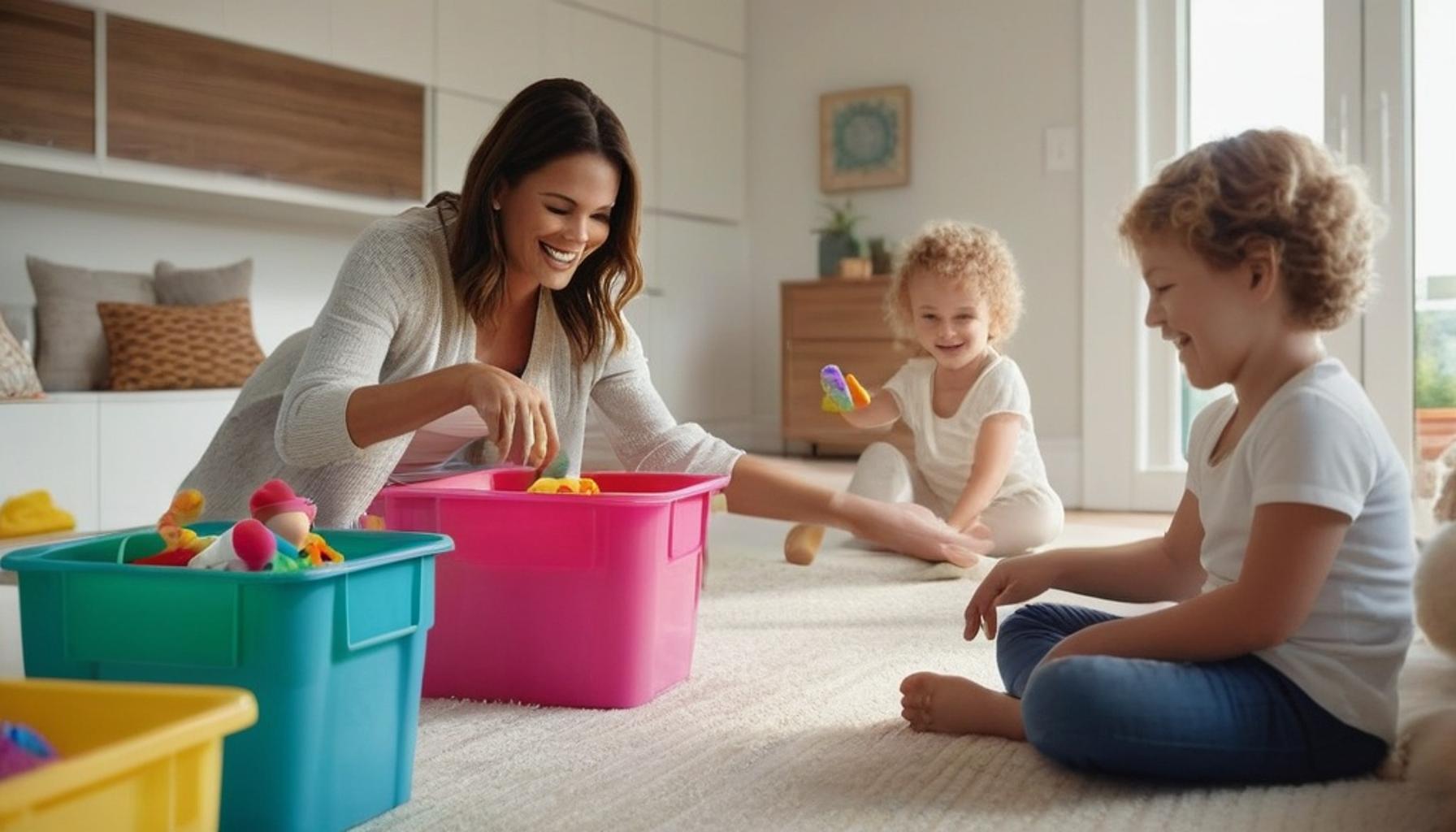
For children’s playrooms, use labeled bins or baskets for each type of toy to encourage organization and easy access. Regularly schedule decluttering sessions, perhaps monthly, where both you and your kids can assess what they no longer use. Involve your children in the process by allowing them to choose items to donate, making it a teaching moment.
How do I tackle decluttering my home office without getting overwhelmed?
To avoid feeling overwhelmed while decluttering your home office, break the space into smaller sections, such as your desk, bookshelves, and filing cabinets. Set a timer for 15-30 minutes to keep sessions manageable, and consider using the ‘4-box method’ where you label boxes for keep, donate, trash, and undecided. Regularly review your paperwork to limit clutter buildup.
What are some specific decluttering techniques for living rooms?
In the living room, start by clearing surfaces like coffee tables and entertainment centers, and only return essential items to those spaces. Use decorative storage options like ottomans and baskets to keep clutter hidden yet accessible. Rotate out decorative items seasonally to maintain a fresh look while minimizing permanent decorations.

Linda Carter
Linda Carter is a writer specializing in minimalism and personal organization. With extensive experience helping readers create more functional and balanced routines, she shares practical advice on decluttering, organizing spaces, simplifying daily tasks, and making more intentional choices. Her goal is to offer clear guidance and accessible strategies that help people reduce excess, improve their surroundings, and enjoy a calmer, more organized lifestyle.